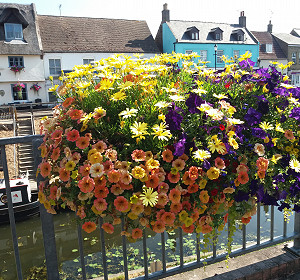
Tips for Britain in Bloom – horticultural achievement
With spring in the air, volunteers from all over the UK will be planning, preparing and planting their entries for this year’s Britain in Bloom contest. With over 40 years’ experience working with councils, gardening groups, schools and a whole range of community organisations, we have picked up a bit of know how over the years - which we are happy to share with you all for free!
Here are some of our top tips for securing a high scoring entry in the horticultural section of the competition – this accounts for half of the overall marks so it’s important to get right.
1. Make an impact:
Entries are marked according to their inclusion of appropriate themes, locations, colour schemes and planting. Judges will be looking for examples of innovation and good presentation, as well as the use of special features to create a focal display point. Include floral and edible plants as well as shrubs, trees and herbaceous plants.
2. 365 days a year:
The judges are looking for evidence of a year-round campaign, with planting taking place throughout the seasons. Ensure that any plans you have for autumn and winter displays are well documented with visual evidence such as photos and video, as well as supporting documentation.
3. Making maintenance manageable:
A volunteer-led entry requires a significant commitment of time and effort. A planned maintenance programme is essential, possibly organised on a rota basis to ensure a manageable workload. Many groups and councils use self-watering containers as they conserve water, reduce maintenance and ensure that plants are growing in optimal conditions.
4. Don’t compromise on quality:
Plants should be high quality and robust to minimise maintenance. Select plants for growth properties as well as appearance. The most cost effective plants are those that last the season and don’t need replacing, so invest in healthy plants and suitable compost. Popular plants include bidens, geraniums, begonias and petunias (although begonias and petunias aren’t always easy to maintain, they tend to last well). Marigolds are also good as fill-in plants until others develop. The RHS Plant Trials and the Award of Garden Merit (AGM) also assess the garden worthiness of plants, whilst the online Plant Selector recommends suitable growing conditions for different plants.
5. Consider containers:
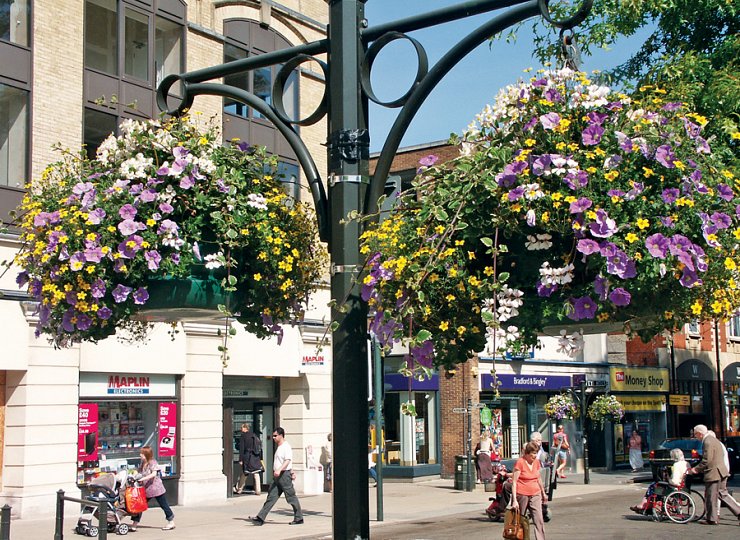
These come in all shapes and sizes and offer more flexibility than beds. Amberol provide a diverse range of containers, from promenade planters to enhance walkways and building frontages, to their giant fountain planters which create a stunning floral display. Choosing self-watering planters also ensures a more ecologically friendly bid.
For a free copy of Amberol’s Britain in Bloom tips booklet, email info@amberol.co.uk or call 01773 830 930.