Encouraging the next generation: an introduction to plants for Key Stage One
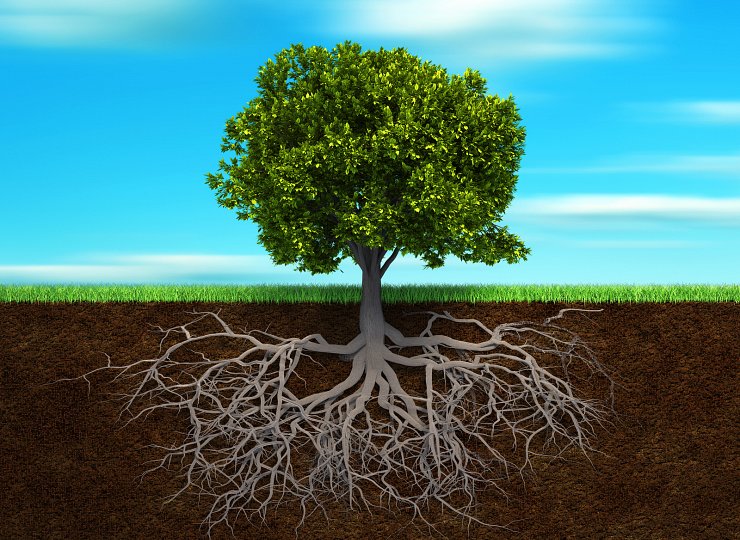
We are surrounded by plants and flowers and so it’s easy to assume that children know all about them. However, when starting a project on plants with young children, it’s important to ensure that they are able to identify different parts of a plant and how they help the plant to survive.
Learning objectives
- To know and be able to name the main parts of a flowering and non-flowering plant.
- To be able to name parts of plants, including trees.
Very young children may be confused between a flowering and non-flowering plant so it useful to observe and compare both types. Bring in a flowering and non-flowering plant in a pot and discuss with the children what they can see, in what ways are they the same and in what ways are they different? Can the children name the different parts of both plants? Talk about what each plant needs to survive and what they might be able to see underneath the soil (it would be useful here to pull up a plant to show the root system).
Compare the pot plant to a tree (this can be a picture but ideally will be a real tree). Can they identify the stem, leaves, and roots? Do trees have flowers? When and why? Now look at the tree (or picture of a tree): where is the stem, where are the roots, where are the leaves? Do trees ever have flowers? When and why?
To reinforce what they have discussed, children can draw and label different kinds of plants, labelling the stem, leaves, root, flower/blossom, and stem. They can make models using modelling clay or pictures using other media. To extend the activity, ask the children to match each part with its function i.e. stem – support and allows water to travel to the leaf, root – anchors the plant and takes in water, flower – attracts insects, leaf - makes food.
Once the key parts and purposes have been established, the children are ready to move on.
Check back next week for our next article: Setting up a growth project in Key Stage One